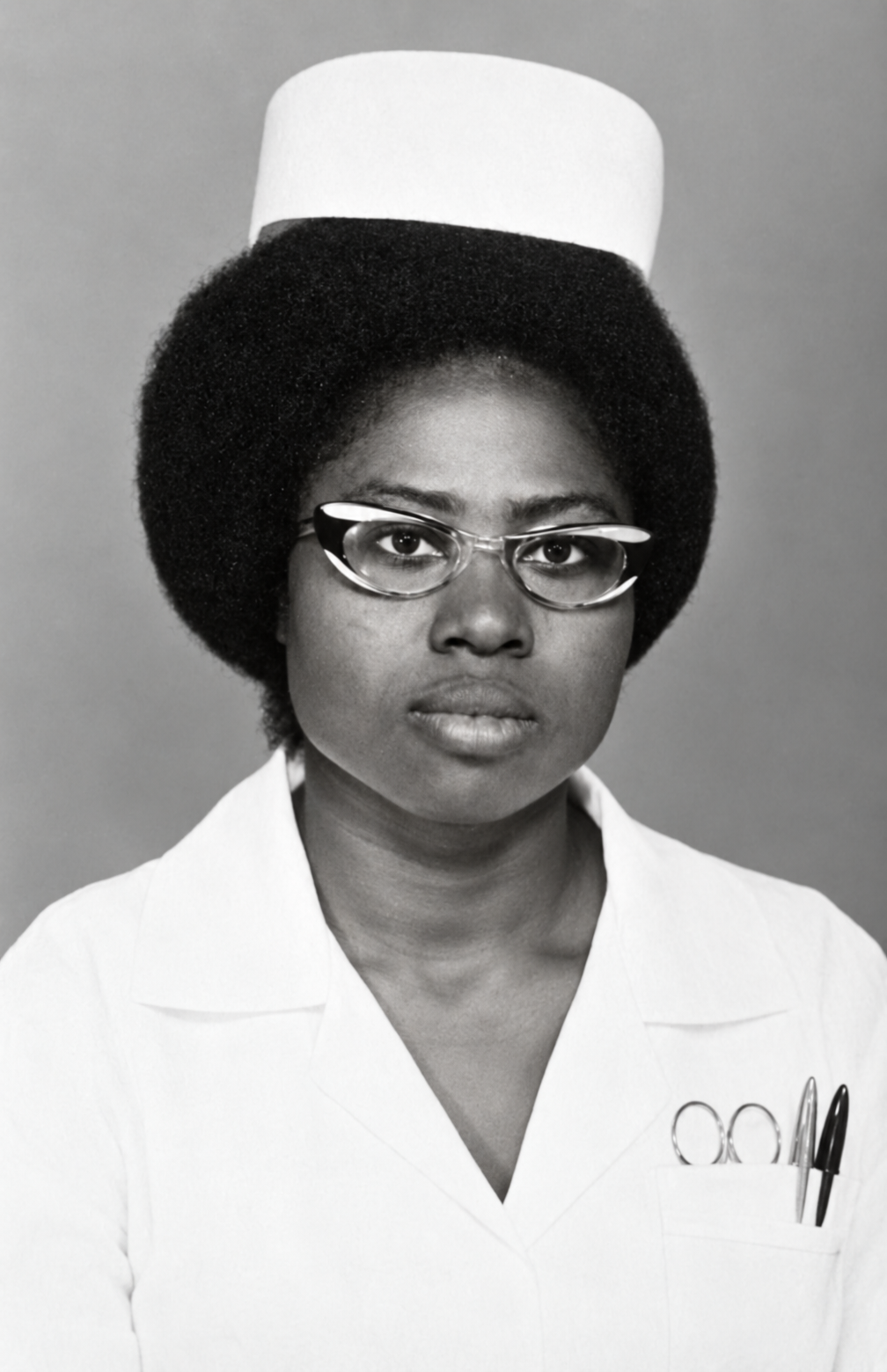
Grace Bakpa Heritage Foundation · Learning Hub
Videos
African animated stories, big ideas and useful conversations. Start with the introduction, then watch Episode 1 and explore the transcripts, discussion questions and poster resources.
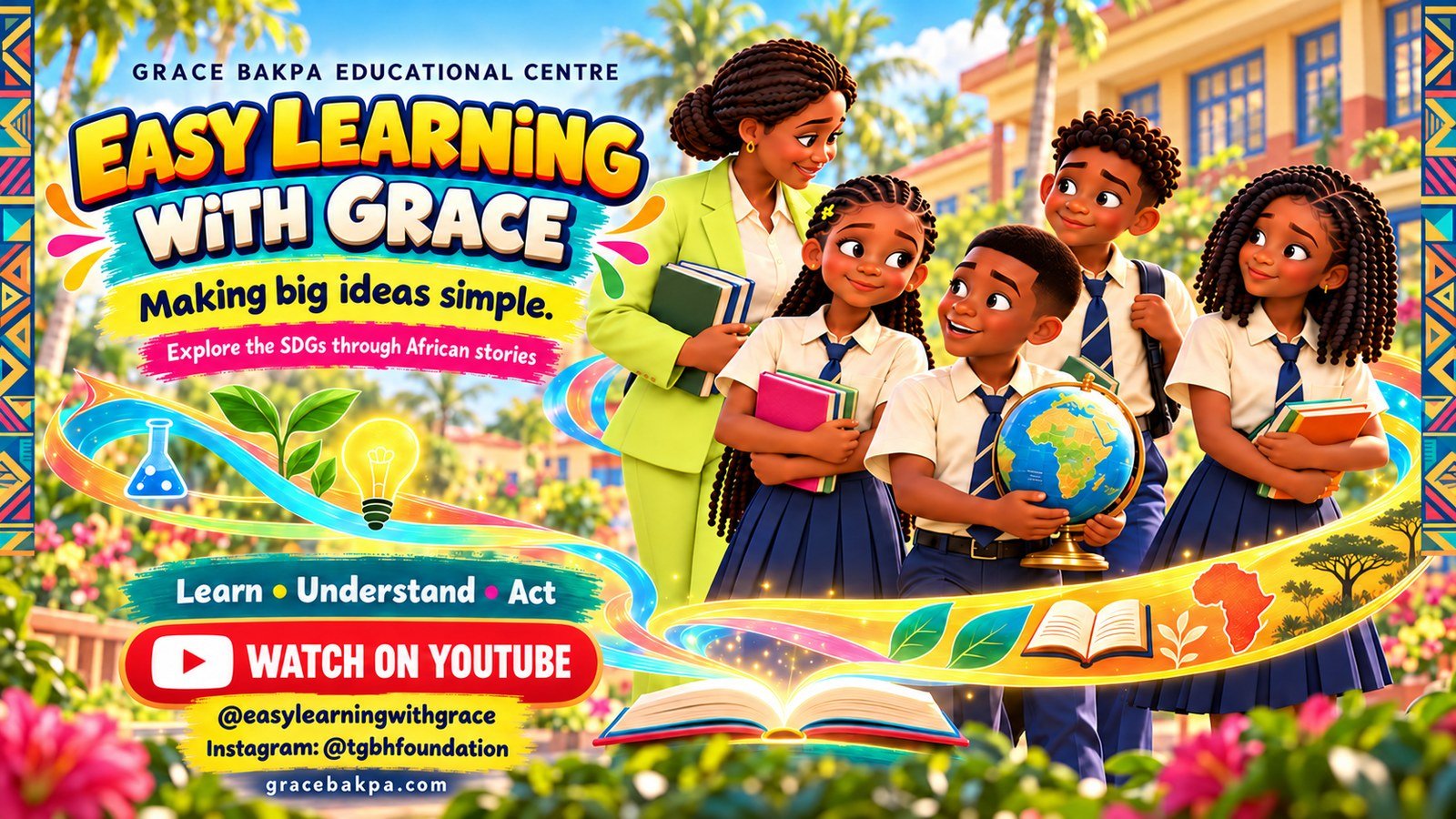
Introduction · The 17 Sustainable Development Goals
Start here: What are the SDGs?
Meet the 17 global goals and discover how education, health, equality and our environment connect. Watch this introductory episode before the goal-by-goal stories.
English captions available: select CC in the player. Read the transcript below or download a text copy.
Watch on YouTube ↗Download transcript (.txt)Read the full English transcript
START HERE: WHAT ARE THE SDGs?
Introductory episode — Learn With Grace
I keep seeing these everywhere.
But what exactly are the SDGs?
Looks like someone gave the whole world homework.
No, seriously. Look at them.
What do all these things have to do with each other?
That’s a very good question.
The SDGs are the Sustainable Development Goals.
They help us see how people’s lives and the health of our planet are connected.
So one problem can affect lots of other things?
Yes. Unsafe water can make someone ill.
Illness can keep a child out of school.
Paying for care can put pressure on a family.
Then clean water helps health and learning too.
And protecting our rivers helps people, fish and the food we eat.
Exactly. Connected problems need connected solutions.
The goals give us a shared direction.
In 2015, all United Nations member states adopted the 2030 Agenda for Sustainable Development.
At its heart are 17 goals: a shared plan to improve lives and protect our planet by 2030.
So the whole world agreed on the direction?
Yes. Sustainable development means meeting today’s needs
while protecting the ability of future generations to meet theirs.
A better life now, and a future others can enjoy too.
The promise is to leave no one behind.
Governments, communities, businesses and people all have a part to play.
All right. Let’s meet the goals.
1. No Poverty.
2. Zero Hunger.
3. Good Health and Well-Being.
4. Quality Education.
5. Gender Equality.
6. Clean Water and Sanitation.
7. Affordable and Clean Energy.
8. Decent Work and Economic Growth.
9. Industry, Innovation and Infrastructure.
10. Reduced Inequalities.
11. Sustainable Cities and Communities.
12. Responsible Consumption and Production.
13. Climate Action.
14. Life Below Water.
15. Life on Land.
16. Peace, Justice and Strong Institutions.
17. Partnerships for the Goals.
Seventeen goals. One shared future.
And they work together.
Progress in one can help move the others forward.
But what can we do while we’re still in school?
Start by noticing what your community needs. Ask questions, listen
to others and work with trusted adults.
We could help keep our surroundings clean and learn how
to protect our water.
We could share what we learn and include classmates who
need support.
I can start by wasting less. My lunch should not
come with a mountain of plastic.
Small actions matter, especially when we learn together and keep
going.
And if a problem is bigger than us?
Then speak up and find partners. Lasting change also needs
good services, fair decisions and resources. Young people can contribute
ideas and help shape those decisions.
Let’s choose one useful action and make a plan together.
For Grace Bakpa Heritage Foundation, this journey honours the legacy
of Elder Grace Flora Oji Bakpa.
Its priorities connect especially with Goal 3, Good Health and
Well-Being; Goal 4, Quality Education; and Goal 17, Partnerships for
the Goals.
Could that mean helping someone pursue nursing?
The foundation aspires to support nursing education, scholarships and
community health through partnerships. These are areas of possibility:
helping people learn, preparing future healthcare professionals and
encouraging healthier communities.
Education that can grow into care for others.
Her Legacy, Their Opportunity. Empowering Dreams, Elevating Healthcare,
Transforming Lives.
So it is homework. But we get to work together.
For our communities.
For a healthier, fairer world.
What is one thing you can do where you are?
Learn the goals. Choose an action. Find people to work
with. The future starts with us.
Seventeen goals. One world. Our future.
Watch, think and discuss
- Which two goals connect to something you see in your community?
- How could progress towards one goal help another?
Episode 1 · SDG 4: Quality Education
Why can’t every child go to school?
In Ekpan, Delta State, Efemena, Bọ̀dé and Egba notice that Emeka is missing from school. Follow their story with Mrs Okoro and explore the support every child needs to keep learning.
English captions available: select CC in the player. Read the transcript below or download a text copy.
Watch on YouTube ↗Download transcript (.txt)Read the full English transcript
WHY CAN’T EVERY CHILD GO TO SCHOOL?
Easy Learning with Grace — Episode 1
SDG 4: Quality Education
Efemena! Hurry up! If we're late again, our teacher will make us explain why!
I'm coming. You walk as if there's a prize waiting for you at the school gate.
There might be. I should get there first and check!
Bọ̀dé. Have you noticed something? We haven't seen Emeka in school for three days.
You're right! He wasn't there for our science experiment either. And you know how much he loves our chemistry experiments!
I hope he's all right. Let's ask Egba. She might know what's happening.
Egba, do you know why Emeka hasn't been coming to school?
I saw him yesterday. He said he misses school very much.
Then why doesn't he come? His mother has been unwell. He's been helping at home.
Oh. How is she now? He said she's getting better, but things are still difficult.
Couldn't someone help them so he can come back? I'm not sure. He told me he's worried about falling behind.
But Emeka wants to become an engineer. He's always talking about building bridges.
And checking whether they'll hold my weight!
We could share our lesson notes. That might help. But he still needs a way to come to school.
Let's tell Mrs Okoro. She might know what to do.
I'm glad you told me. Emeka's situation reminds us of something very important. Not every child has the same opportunity to attend school.
But why, Ma? Isn't school meant for everyone?
Yes, Bọ̀dé. Education is a right, but many children face difficulties that stop them from learning.
Some families struggle to afford uniforms, books, transport or other school expenses.
Some children live very far from the nearest school and traveling there may be difficult or unsafe.
Some schools do not have accessible buildings, suitable learning materials or enough support for children with disabilities.
Sometimes families must leave their homes because of conflict or danger, interrupting children's education.
I never knew so many things could stop a child from going to school.
That's why the United Nations has a goal called Sustainable Development Goal Four: Quality Education.
It means working towards inclusive, equitable quality education and lifelong learning opportunities for everyone.
So it isn't just about having a school building?
Exactly! Children also need good teachers, safe classrooms, suitable learning materials and the support to succeed.
Then how can we help Emeka?
Let's begin by understanding what he and his family need.
Emeka! You came!
Of course! Who else is going to help me build our science project?
We missed you at school.
I miss school too. But Mum hasn't been well, and I've had to help at home. I'm afraid I'll fall behind.
Emeka, you haven't been forgotten. We came to listen and see what support might help.
I'm getting better, thank you. But transport costs and things at home have been difficult.
With your permission, I'll speak to the school about the support available.
We can also find out whether a community group can help with transport and learning materials.
And we can share our lesson notes.
I'll help you catch up on science!
And I can study with you after school when it's convenient.
Thank you, everyone. I thought I had to face this alone.
Helping a friend is a wonderful beginning. But every child needs a fair chance to learn. Whether or not they have friends who can help.
[Emeka returns to school and takes part in a supervised chemistry experiment.]
Closing message: Every child deserves the chance to learn.
Watch, think and discuss
- What stopped Emeka from attending school?
- How can friends help, and what support must schools and communities provide?
- What does a fair chance to learn look like?
Short preview · Meet the friends
What are those?
A mysterious poster sparks a big question. Enjoy the restored introductory preview, then return to the full introduction above.
English captions available: select CC in the player. Read the transcript below or download a text copy.
Watch on YouTube ↗Download transcript (.txt)Read the full English transcript
WHAT ARE THOSE?
Introductory preview — Learn With Grace
Wait…
What?
I keep seeing these everywhere.
But what exactly are the SDGs?
Seventeen of them?
Looks like someone gave the whole world homework.
No, seriously. Look at them.
Health… education… poverty… climate…
What do all these things have to do with each other?
That's a very good question.
Watch, think and discuss
- Why might health, education, poverty, clean water and the climate be connected?
Share the learning
Posters, transcripts and classroom conversations
Share the series with your class, family or community. The poster pack includes portrait, square, vertical Story and widescreen formats, with the YouTube and Instagram handles.
Download the four-format poster pack (.zip)Teachers’ resources →Explore further
Health, nursing and community learning
Continue with these selected videos from other educators and speakers.
Health & well-being · Public health
What is Public Health?
Let’s Learn Public Health
Explore what public health means and how it connects to the health of our communities.
Watch on YouTube ↗Think about it
Choose one example of public health from the video. How does it help people in your community, and who plays a part in making it work?
Nursing & healthcare · TEDx talk
Nurse Innovation: Saving the Future of Healthcare
Rebecca Love · TEDxBeaconStreet
Explore nursing, innovation and the future of healthcare in this talk by Rebecca Love.
Watch on YouTube ↗Think about it
How could nurses help improve healthcare in your community? Choose one idea from the talk and discuss how it might make a difference.
Nursing & healthcare · TEDx talk
Just a Nurse?
Debra Albert, DNP, MBA, RN, NEA-BC · TEDxNYU Langone Health
Reflect on the role and value of nurses in this talk by Debra Albert.
Watch on YouTube ↗Think about it
After watching, how would you describe the contribution nurses make to healthcare? Discuss one idea that changed or strengthened your understanding of nursing.
Explore Easy Learning with Grace on YouTube →